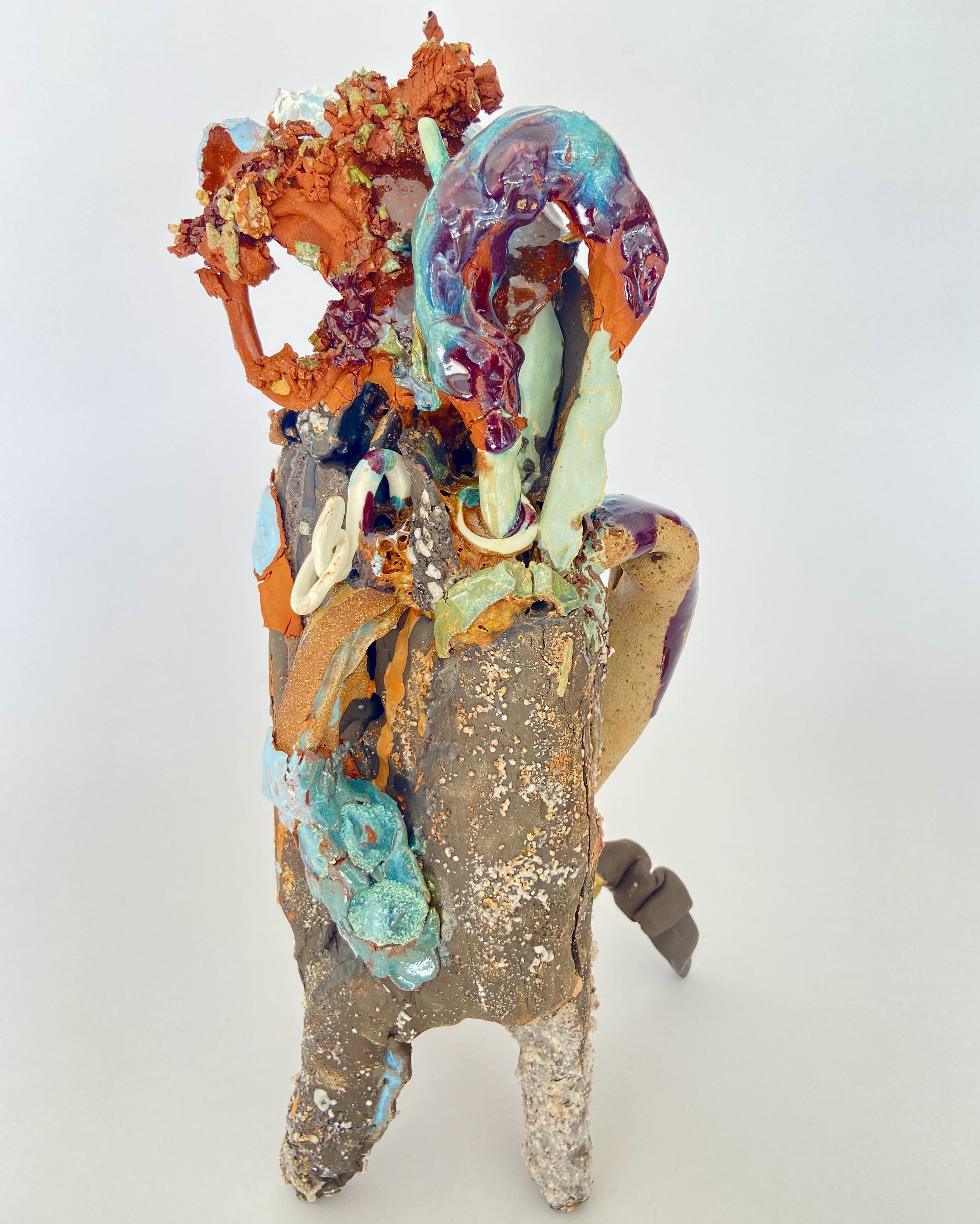
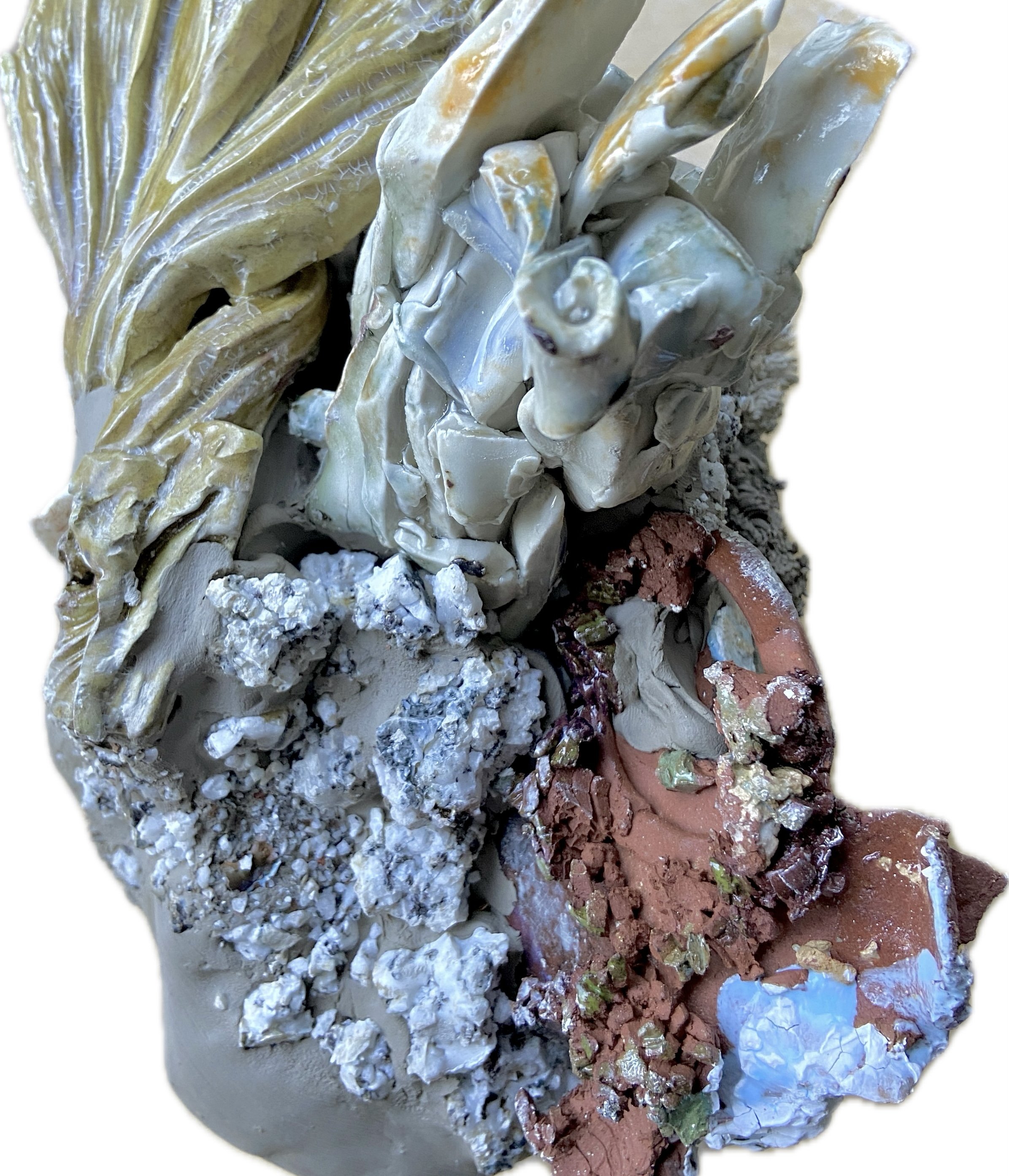
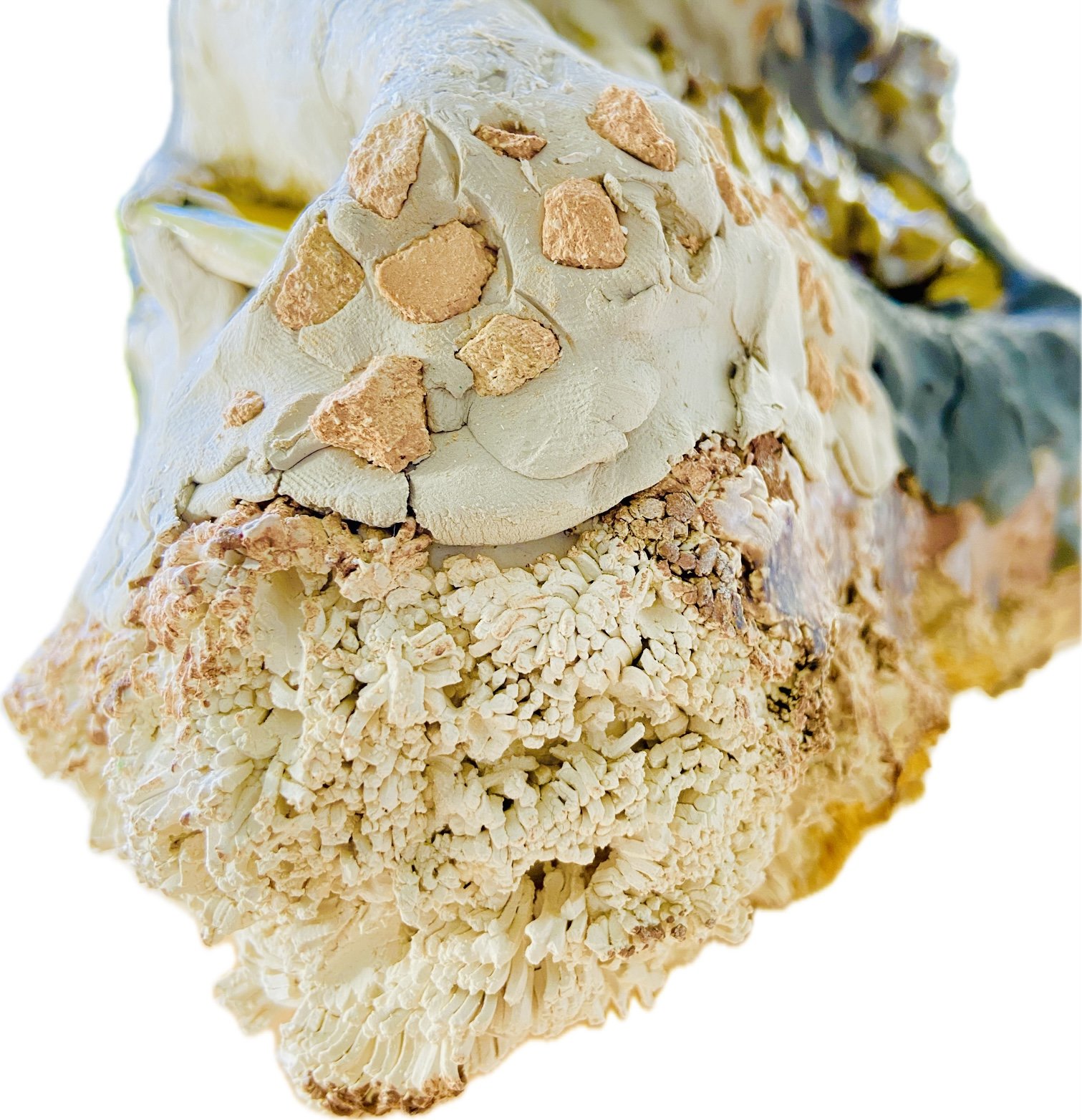
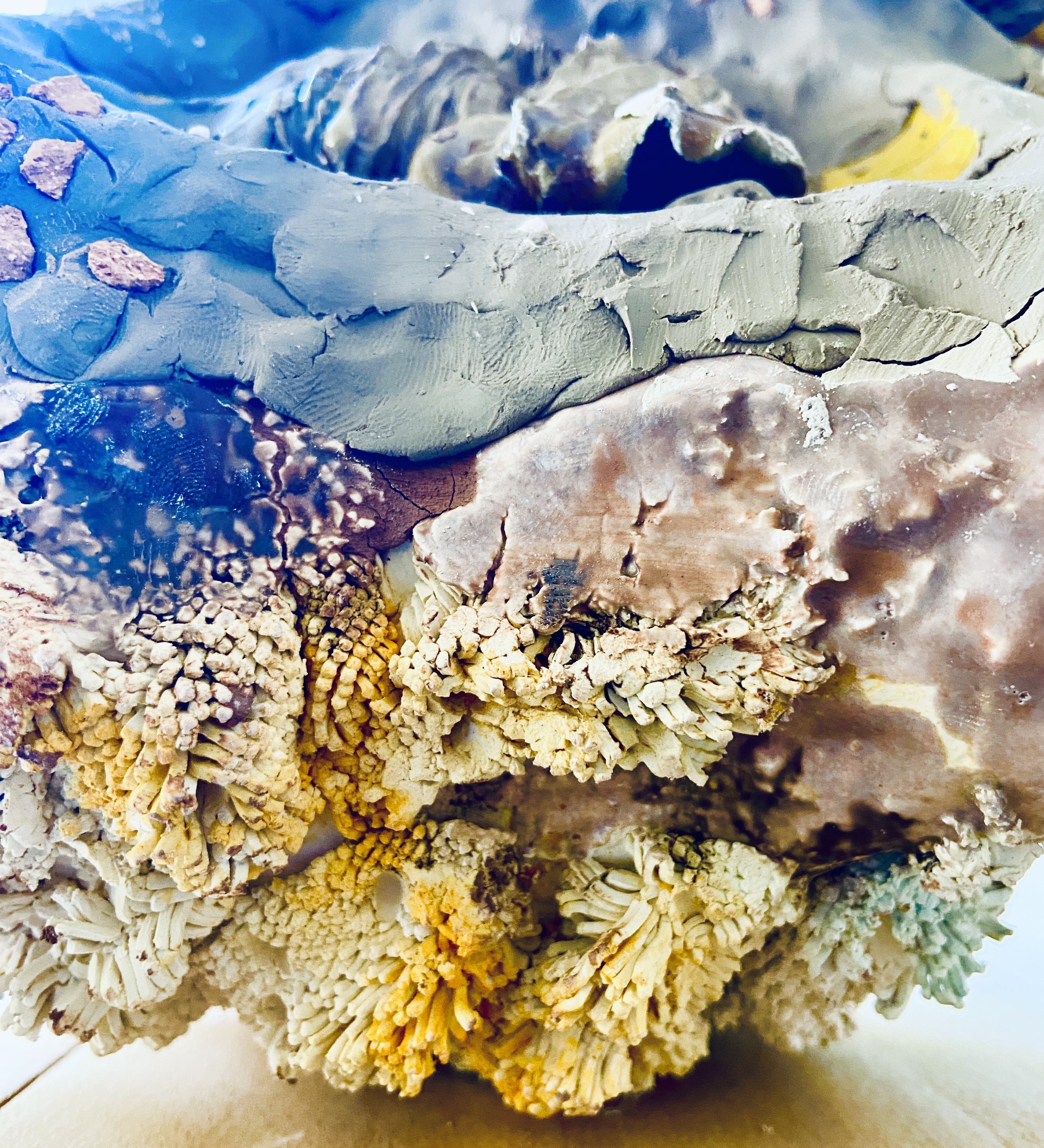
Untitled work no. 128. Clay, glaze, minerals. Exhibited at Corner 7 Gallery, Camden. November 2024
Julia Ellen Lancaster is an artist working with clay and ceramics. Lancaster’s work is driven by a compulsion to respond to emotional intuition, and externalise the impression that a time, or the feeling a space and its contents, provoke. Lancaster works with wild clay, rocks and collected materials, exposing them to heat to alter their make up and structure, working intuitively to explore their qualities.
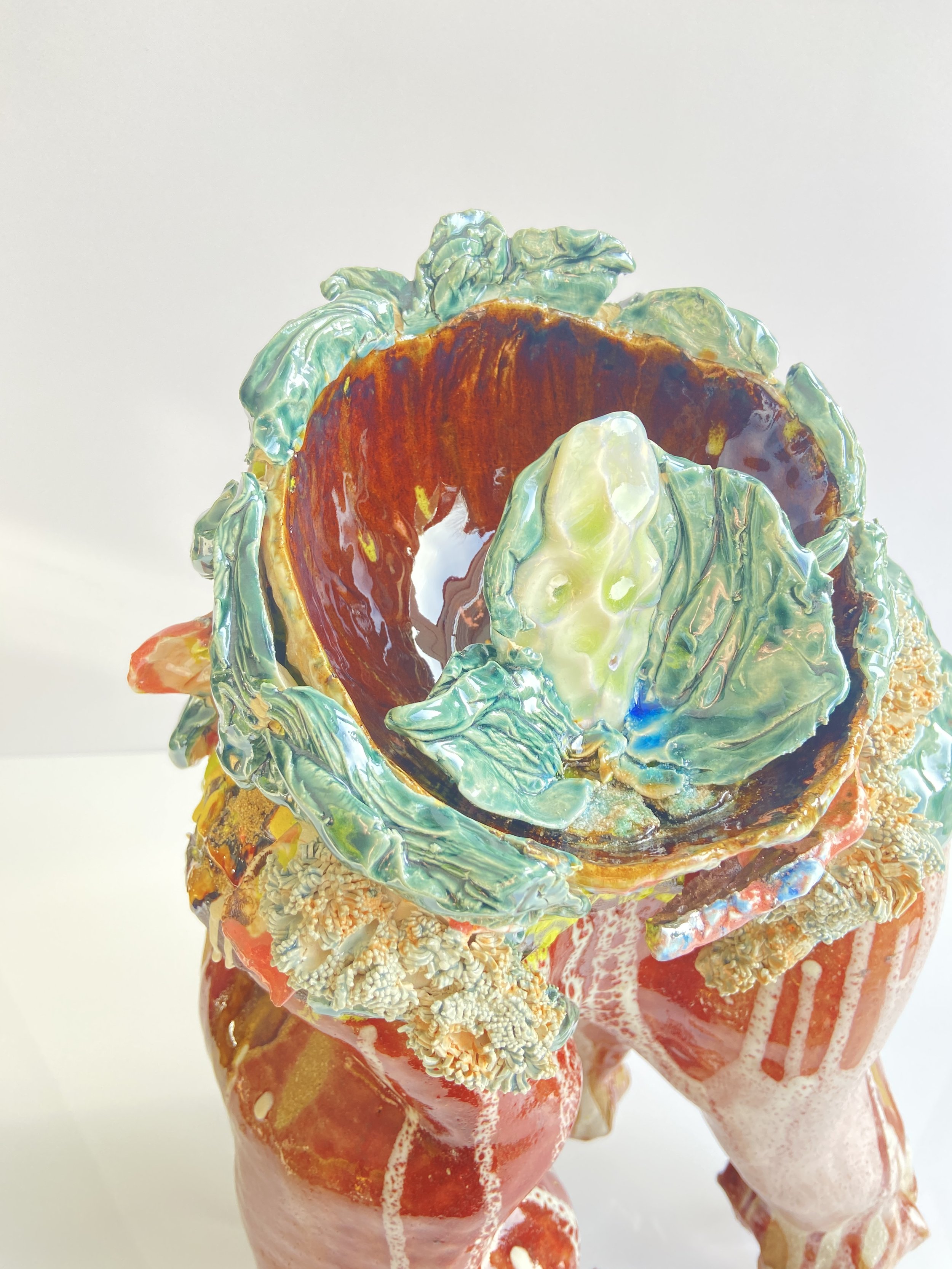
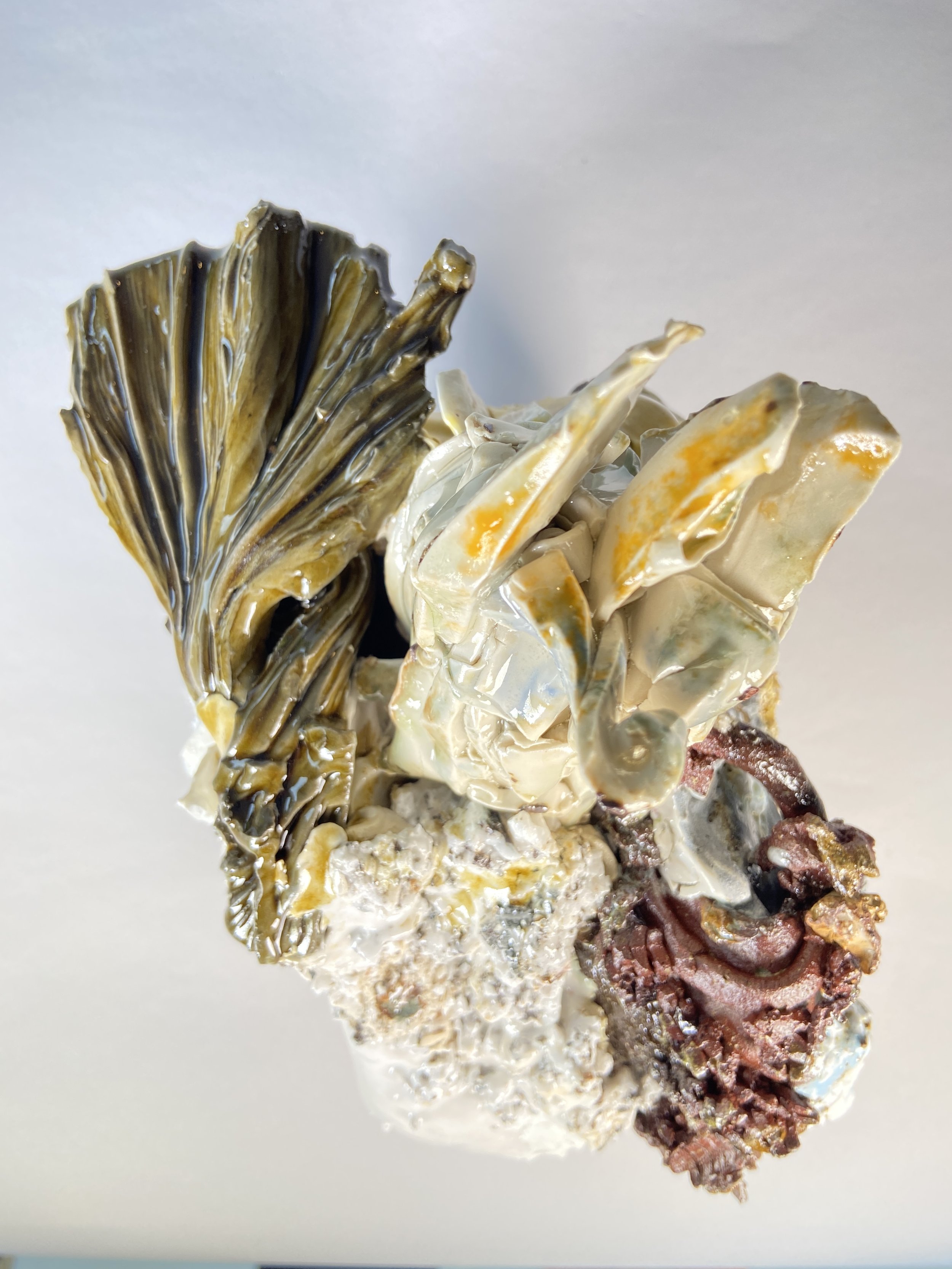
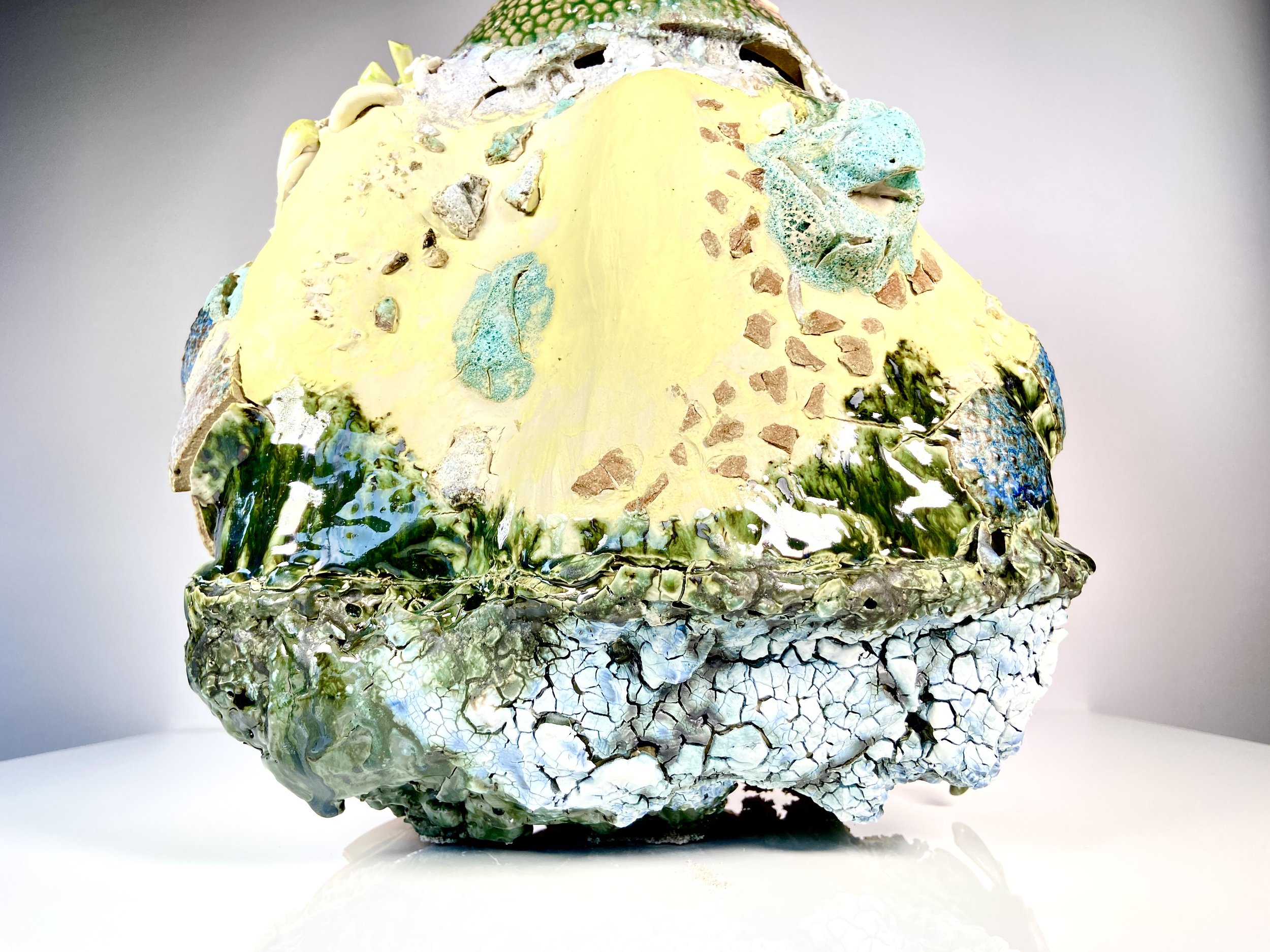
“Julia Ellen Lancaster has become highly regarded for creating clay sculptures that are as complex as they are intuitive.”…….”Ellen Lancaster’s background in fine art gallery management exposed her to a variety of artistic practices over a relatively long period. This has enabled her to locate her approach amidst the legacies of important twentieth-century female artists. Influences include the US-based artist Lynda Benglis, who has foregrounded the female body as a means to challenge patriarchy, automatism in the work of the under-appreciated British surrealist painter Ithell Colquhoun (1906-1988), and the German-born American sculptor Eva Hesse (1936-1970), who pioneered the use of new materials in her work, such as plastic and fiberglass”
Ashley Thorpe, Collector/Author - monographs Contemporary British Ceramics: Beneath the Surface (2021) and Contemporary British Studio Pottery: Forms of Expression (2023) with The Crowood Press
“In addition to increased focus on waste materials, many ceramicists now embrace a more relational approach to matter itself, seeing materials as collaborators rather than inert products. The shift echoes New Materialism and post-humanist thinking of the 1990s and 2000s, which emphasises that materials and environments are not passive but can shape outcomes. In ceramics, this perspective also reflects a practical need to work more responsibly with finite resources, and carries forward in new ways the long-held belief that materials drawn from a specific place can imbue a work with the distinctive character of that place.
British artist Julia Ellen Lancaster’s practice is one example of contemporary work grounded in this approach. Her method of “making, unmaking, remaking” reflects what she describes as “a process of growth, decay and renewal,” where materials become partners in ongoing conversation rather than passive substances to be manipulated. “In the interplay between human action and material agency, locality emerges not as a backdrop, but as a co-creator,”
Amelia Black, artist and material researcher currently based in Naarm (Melbourne).The Journal of Australian Ceramics, (Vol 64 No 2)
“At the centre of Lancaster’s work is the material. Partially sourced directly from the earth by the artist, these works combine clay, minerals and rocks in their raw form. Concerned by the environmental impacts of ceramic production, Lancaster throws nothing away, reincorporating detritus and rubble from the studio floor back into her sculptures. Often her works are left unfired so they shift organically and manipulate over time – sometimes by the hand of the artist, sometimes by the whim of the material. In allowing these forms to alter themselves, Lancaster draws attention to the fragile and transient nature of clay as both material and property of soil”.
Rose Thompson, Assistant Curator, Royal Academy of Arts, London.
“Both familiar and utterly alien Lancaster’s sculptures looked as if they had made their own way inside. Some will have scuttled, others somehow thrown there by a raging sea. They had an uncanny quality, of something found rather than made, as if by the turn of each tide they had grown…………Some appear excavated, born of the earth’s need to move and crush and compress. Their layered growth is stratified and archeological, a body proud of its history and entirely grounded in its sense of place. Built from foraged local clays and found materials their lineage is as Cornish as the view they keep sentry over’
Michael Harris, independent Curator and Curator & Deputy Director at Penlee House Gallery & Museum, Penzance, Cornwall.
“Lancaster’s work is stunning and soulful, ugly and beautiful …….all the feels”
Faye Dobinson, Curator, Jupiter Gallery, Newlyn, Conrwall.